Posttraumatic Growth: Finding Glimmers in the Dark
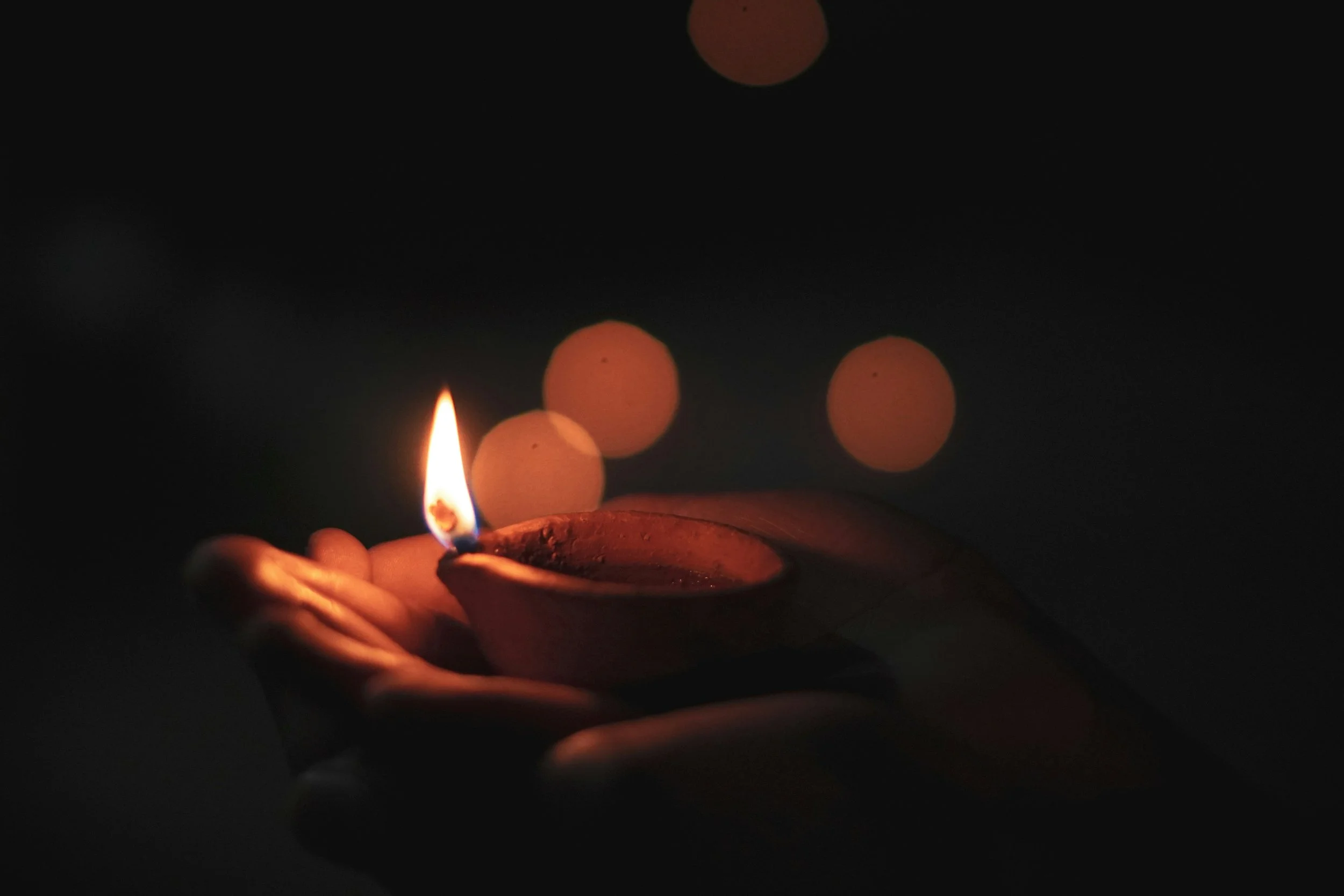
As humans navigating a challenging world, we are constantly inundated with sensations and experiences that have the potential to dysregulate us. On a daily basis our windows of mental and emotional tolerance are tested by large and small stressors, and we adaptively move through sequences of feeling overwhelmed, re-stabilizing ourselves, and harnessing the inner strength to move forward.
However, when life circumstances or events become so overwhelming that we find ourselves incapable of processing them, we can become entangled in the vestiges of trauma. Traumatic experiences easily become psychological, emotional, physical and even spiritual burdens that we carry with us long afterwards. The pain can be cumulative over years or have occurred in an instant, and few of us are exempt from its influence. Studies estimate that 70% of people worldwide have or will experience one or more potentially traumatic events in their lifetime.
The American Psychological Association’s DSM-V manual defines trauma as “exposure to actual or threatened death, serious injury, or sexual violence”. Some incidents may be more acute, such as the grievous consequences of military combat and physical assault. Others are chronic environments of cumulative suffering, such as Adverse Childhood Experiences (e.g. abuse, domestic violence), that are progressively destabilizing, like a death by a thousand cuts. In the United States, approximately 6% of all adults have been diagnosed as meeting trauma criteria at some point in their lives, and globally the count is 3.9% of the population.
Importantly, since its inception the APA’s definition of trauma has been deemed by many in the psychology community to be too narrow. As of 2025 there have been numerous calls to expand the DSM-V definition to include frequently untreated and under-diagnosed forms, including invisible traumas (neglect), identity-based traumas (discrimination), and systemic traumas (experiences of oppression). Increasingly researchers are also exploring the outcomes of medical trauma, natural disasters, community violence, and other adverse events that can leave scars on individuals and their communities.
Trauma Causes Deep Suffering
For any traumatic experience, it is less about an event being recognized universally as dangerous or harmful, and more about the degree to which a person is traumatized by it.
Relationship wounds can impact our sense of self and life purpose, as attachment ruptures reinforce negative beliefs about our worth. Physical violence or injury can mar our sense of safety in the world and in our own bodies. Complicated bereavement such as the sudden death of a loved one can unravel our beliefs about existential meaning, or instill existential anxiety. Undergoing a life-threatening illness can shake our belief in a hopeful future. Surviving suicidality and the dark internal world of severe mental illness can profoundly alter our view of life. Experiencing moral injury through violating our moral code can deeply shake our self-trust.
In all these situations, trauma makes it easy to become stuck in painful beliefs, feelings, and physiological reactions. Some will develop mental health disorders as a result, including Post Traumatic Stress Disorder (PTSD), Major Depressive Disorder, Generalized Anxiety Disorder, and types of Adjustment Disorders. Those with PTSD can exhibit intense signs of distress such as emotional and visual flashbacks, hypervigilance, dissociation, nightmares, intrusive thoughts and ruminations, negative self-beliefs, and chronic pain. Symptoms of depression and anxiety can span a profound loss of joy or anhedonia, inability to curb worry, feelings of dread, panic, and hopelessness.
Recovery Offers Us Hope
In my trauma work with therapy clients, I see individuals who are seeking relief from their mental and emotional pain, to understand their story better, and to find ways to move forward. I enter into the work holding great hope for them, not only that they can recover, but that shifts in core beliefs can be an opportunity to develop new, lifegiving ways of being in the world. This is not naive positivity; rather, it is a perspective supported by research on posttraumatic growth.
The concept of posttraumatic growth (PTG) was first developed in the 1990s in an effort to describe the interplay of resiliency, recovery, and positive meaning-making that individuals with trauma histories often report. Research on psychological, relational, and embodied changes found that roughly 53% of those who undergo traumatic events go on to develop moderate levels of growth. Of course, this observation has been explored by numerous religions, philosophies, and literatures since ancient times, for as long as people have encountered suffering.
Formal research on PTG identifies 5 areas of growth that individuals can experience to varying degrees. They are building personal strengths, entering healing relationships, discovering new life possibilities, deepening insight into life meaning, and exploring spiritual change. Such forms of growth unfold organically, and are not necessary in order to heal from trauma. Instead of benchmarks for recovery, they illustrate the profound capacity humans have for overcoming adversity.
However, healing is not simple or straightforward. It is often messy, complex, and always deeply personal. In my practice I see clients who share their recurring or even daily struggles to manage intrusive fears, practice self-compassion in response to shame, recover from triggers in unexpected contexts, overcome narratives of helplessness, and craft a vision for a brighter future. These are incredibly strong individuals and I have been humbled to witness their journeys.
The 5 Types of Posttraumatic Growth
I. Building Personal Strength
Discovering and leaning into your personal strengths is one core aspect of PTG. It is easier for some than others, depending on how much developmental support you had to form a strong sense of self. It can be a hard-won realization to witness qualities which were always present, and were harnessed instinctively in the face of hardship.
I once worked with a client who had undergone chemotherapy treatments that had shaken her sense of self. Through steady reflection, she identified her enduring faith in humanity and capacity for holding on to hope in dark times. These were not new traits; rather they were strengths that had steadied her during many moments in her life. It validated and deeply reassured her to recognize how courageously she had navigated the de-stabilizing fight with cancer.
Building such trust in your capacity to tackle life challenges is often self-reinforcing, boosting your confidence and helping to sustain a sense of hope. It can also aid in reconciling how traumatic experiences were out of your control, and processing highly valid doubts about the justice of the world.
However, it can also be exhausting to soldier onward without the support of key internal resources. A well-researched coping skill that we can strengthen is our capacity for self-compassion. This practice is instrumental in confronting false shame and negative self-beliefs that trauma often instills. Even if you were not raised in a compassionate environment, you can develop this skill through practicing self-kindness, leaning into common humanity, and gently supporting yourself in moments of mental and emotional distress.
Self-compassion practices include:
Kindly acknowledging pain when it arises
Speaking to yourself as a friend
Soothing and supportive self-touch
Naming critical thoughts as natural survival responses
Connecting with your inner child
Doing activities that support nervous system rest
Guided meditation practice
For many, it is difficult to initially accept self-compassion. I have seen clients with internalized shame and self-blame who had battled an accusatory inner critic for years or decades. To them, softening felt like opening a door to overwhelming painful thoughts and memories, and also to grief of recognizing they had been so hard on themselves. But emerging research around compassion-focused therapy continues to demonstrate how it can provide meaningful, powerful relief from trauma symptoms.
II. Healing in Relationship
A second theme of posttraumatic growth is an increased ability to trust others in restorative relationships. In the immediate aftermath of trauma, social support has been shown to serve as a buffer against the development of long-term symptoms. Lack of support unfortunately has the opposite effect of increasing risk. When we feel alone after experiences of violation or betrayal, we can become disillusioned about the goodness of humanity and develop complex psychic layers for self-protection. This can lead to further isolation and compounded feelings of abandonment.
Also, some traumas such as miscarriage or assault are often more private in nature. If you are courageous enough to share your story with others, you deserve to be met with safety, understanding, and care. Feeling able to rely on others in times of need can strengthen bonds, and reinforce trust in people who care and want to help. This in turn increases a felt sense of belonging that can ground your healing process.
Many also discover healing connections through supporting others. One of the most powerful shifts I witness in clients is how their empathy can exponentially grow. For some, pain fuels unexpected discovery of personal or vocational passions, whether through mentoring, advocacy work, or other forms of spreading kindness.
Certain therapy treatments designed for military veterans and first responders diagnosed with PTSD include helping them create a plan for directing painful experience toward service to others. As the program founders describe:
The traumatic events that they have experienced do not provide this meaning, but represent an opportunity to reconstruct a system of core beliefs that yields a life of purpose, where the trauma survivors see their value and are more devoted to a mission they find meaningful, as it benefits others as well as themselves.
III. Discovering New Possibilities
Posttraumatic growth can also manifest in thoughtful questioning and re-shaping of life priorities. Hope that transforms is not illusory, wishful thinking that we hold in our minds, but rather a guide for how we function and move through the world. This process of steady self-reflection can be enhanced through exploring your values.
Oftentimes, adversity shifts how we relate to our core values. Many who view painful moments as major landmarks in their life journey discover their sense of self and assumptions about the world profoundly challenged. Values work can reveal how we respond to life, and inspire soul-searching to uncover ways of being that no longer serve us.
My clients have often expressed to me that weathering the recovery process pushed them to seek out more authentic ways of living. Some questions that would come up organically include:
How do I truly want to live given the things I have lived through so far?
What activities do I want to commit to, whether new and unexplored, or time-tested?
What dreams and goals do I have for my life that were delayed, that I want to invest in now?
What experiences do I want to prioritize having and building towards in an intentional way?
IV. Finding Existential Meaning
Existential anxiety and depression can feel pervasive after trauma. When core assumptions about life and the world are disrupted, we can struggle with beliefs such as, “I am not safe, I am powerless, I don’t belong, I am weak, I cannot succeed”. Such internalization of suffering can become painfully ingrained. But within crises, some realize a gentle opportunity to engage with existential questions in a more meaningful way.
Existential therapy is a type of treatment developed by Jewish psychologist Victor Frankl following World War II. During and after the events of the Holocaust, Frankl struggled to make sense of horrors he experienced and witnessed inside concentration camps. His reflections culminated the book Man’s Search for Meaning, in which he wrote about the importance of confronting core life anxieties like awareness of death, confusion about identity, and sense of purpose.
Constructing existential meaning and a coherent worldview is a deeply personal task. Several years ago I was moved to work with a client who was diagnosed with bipolar and schizophrenia disorders, and who had experienced homelessness and drug addiction for years. When I met her she had steadily overcome her addictions, sought social resources and found independent housing, was embracing a new loving relationship, all while maintaining a lifelong trust in a higher power. She frequently expressed gratitude for a profound sense of renewal, recognizing how she had leaned into her faith and endurance to achieve dearly held life goals.
Frankl highlighted several actions that can similarly enhance our autonomy, identity, and sense of purpose:
Viewing existential challenges as a part of life
Doing creative work that is aligned with what is most important to you
Generative work aligned with goals greater than yourself
Experiences of love and intimacy
Cultivating courage in the face of suffering
V. Exploring Spiritual Change
Spiritual wounds or what some traditions call soul wounds caused by trauma can be deeply disorienting. Our spiritual life is broadly defined as “an essential and universal human capacity that involves a search for connectedness to oneself, others, nature or a higher power of one’s belief, meaning and purpose, and may or may not be linked with any form of religion”. This understanding recognizes that we each engage with spiritual questions at some level, whether through organized religion, connection to nature, creative practice, or philosophical exploration.
Research on positive spiritual coping shows that spiritual practices and beliefs are often a protective factor against trauma that indirectly mediates impacts of depression, stress, and anxiety. Some individuals will adapt their belief structures to encompass painful events or readjust their beliefs altogether, and others may explore faith systems for the first time. Seeking spiritual alignment can provide comfort, meaning, and hope when profoundly lost.
Understandably, others will doubt or lose their original faith. Who of us has not questioned why any higher power would allow terrible things to happen to the innocent, or how we make sense of tragedy, harm, betrayal and loss? What does it mean that humans cause deep suffering to each other? To engage with such questions is to grapple with some of life’s deepest mysteries.
Regardless of our faith structure, we can rediscover parts of ourselves that have been split off and seek to restore peace in our spirit. Exploring spirituality often looks like:
Meditation or contemplative prayer
Nature immersion and connection
Creative expression (art, music, writing)
Ritual and ceremony
Community spiritual practices
Reading spiritual texts or philosophy
Service to others
Grief rituals
Is Growth Necessary for Healing?
It must be emphasized that finding a “silver lining” is not always possible. Some wounds are so severe that their impact lingers on. In my practice, I am cautious about how I explore posttraumatic growth with clients, or whether I introduce the concept at all. For some it can be validating as they feel seen in their resilience and meaning-making. But for others, it can feel like pressure to perform gratitude for suffering. I consistently emphasize that healing does not require growth; sometimes, survival is enough.
Rather than pursuing a redemptive story arc, we stay present to their unfolding process and consistently practice grounding skills while navigating trauma-based reactions to difficult triggers. They build self-empowerment with reliable support to move forward. If any growth occurs, it is organic and not through mere willpower.
We should be wary of anyone who imposes a narrative of healing that pressures people to recover quickly (“Why haven’t you grown from this yet?”), weaponizes gratitude (“You should be grateful for your trauma”), or invalidates pain (“At least something good came from it”).
The reality is that trauma symptoms and posttraumatic growth often coexist together, with positive and negative consequences of painful experience meeting in a messy middle. We can actively manage a shaken sense of self and major life adjustments, while also gradually integrating what happened to us into a cohesive life narrative.
Social Systems Impact Our Recovery
Lasting recovery also does not occur in a vacuum. As individuals who rely on personal strength, community support, and broader social systems, our health is influenced by a complex web of environmental factors. Traditionally, views on resilience after hardship were focused on the individual and their immediate support system, and how well they could return to former ways of functioning. This limited view implied that resilience was primarily a personality trait born of persistence and personal wisdom.
Nowadays, resiliency experts recognize that individual healing is greatly impacted by macroenvironments and systemic supports that some may not have access to. Many are denied an upbringing where positive coping with pain was modeled at home. Political structures can make finding closure through legal channels difficult. Socioeconomic realities impact our ability to meet healthcare needs. Disenfranchised grief from traumatic losses that lack common understanding can make it difficult to experience others coming alongside us.
Life-altering circumstances are already difficult to navigate in isolation, and many encounter systemic barriers in the immediate aftermath of an event, or while navigating years of recovery. It takes enormous strength to confront such real limitations and harness resources that are available, all while practicing hope.
With my clients I hold these realities in mind, remaining curious and understanding of each individual’s unique network of support. We look at the combinations of resources they do have or can develop, acknowledge frustrating limits, and identify real opportunities to move forward.
Therapy Is A Guide for Healing
Making space for introspection and learning regulation for trauma are courageous intentions that therapy can support. If you are experiencing symptoms such as depression, anxiety, intrusive thoughts, chronic tension, and low self-worth in the wake of trauma, there are many established therapies to consider. Science-backed and evidence based trauma therapies include:
Trauma-Focused Cognitive Behavioral Therapy for children and adolescents
Use of adjunct medication
Emerging fields of trauma research are exploring the benefits of psychedelics:
Many of these talk-based, somatic, and experiential therapies can be combined to support you in treatment. Finding a well-trained therapist who can tailor their approach to your unique needs is key.
Therapy’s benefits can be better understood in the context of recent discoveries around the nature of trauma. In 2023, research using fMRI data revealed that traumatic memories and regular memories are represented differently in the brain. Rather than being intense, emotionally charged memories, traumatic experiences are not yet stored in the brain as integrated memories at all.
Regular memories are processed and stored in the hippocampus as consolidated, explicit memories that can be retrieved and talked about. However, trauma is linked to activation in the posterior cingulate cortex, a brain network that guides active reflection and use of imagination. These are present-day activities, and this difference explains why dissociation and flashbacks occur outside of our control, when we re-live the trauma as if it were still happening in our bodies.
In essence, these are experiences that are inadequately processed and maladaptively stored. The essential task is to continue integrating them so the brain can understand that the threat is over, and the danger is in the past.
A well-trained therapist can help you unpack your trauma history in such a way that it is no longer emotionally overwhelming, and you are able to ground yourself safely in the present moment. This process involves applying emotional and nervous system regulation strategies within sessions to prevent retraumatization while sharing your story.
Final Takeaways
Our path after trauma is not linear. It often involves setbacks, breakthroughs, periods of intense struggle, and moments of unexpected discovery. Whether you are living in the immediate aftermath of a traumatic event or navigating the long-term effects of childhood adversity, your journey is a courageous one.
In learning about posttraumatic growth, we must gently remind ourselves that it is not a result to achieve, but instead an organic process that can unfold as you do the difficult work of recovery. The five PTG themes of personal strength, deepened relationships, new possibilities, existential meaning, and spiritual change are not requirements for healing. They are patterns that have been observed in many adapting to their complex realities after trauma. What matters most is for each of us to find what supports our restoration and sense of well-being.
If you’re struggling with trauma symptoms or a profound sense of being wounded by what you have endured, please know that help is available. Working with a trauma-informed therapist can offer a safe container for processing your experiences at your own pace, with approaches designed to meet your unique needs. Your healing matters, and whatever growth emerges along the way is yours to define.
