Do People with Bipolar Disorder Fall in Love More Deeply, Or Even Love Harder?
“To be seen in my wholeness, in my fire and my shadows, is the beginning of love.” - Anonymous

When I met my partner two years ago over a spontaneous weeknight dinner, I was in a fairly clear and stable headspace. I’d come out of a season of incubatory singleness and was embarking on wider friendship and dating connections with open and renewed curiosity for the world. That night I remember noting how he made my nervous system feel: he was playful and quietly engaging, and I felt a gentle invitation.
Through texts and shared time over the ensuing weeks I came to experience the exciting onset of total enamoredness. There were undeniable ingredients for compatibility present like intellectual equality, creative camaraderie, values alignment, and physical magnetism. I started telling my girl friends, with awe and a degree of self consciousness, that it felt like a kismet bond, founded on a shared spiritual framework for how we viewed true love.
One could say we were simply a good match, naturally compatible and meeting through chance. But my intuition circled a deeper meaning, one guided by faith in forces beyond conscious choice and giddy excitement.
Our bond catalyzed a period of creative expression for me in song, poems, and effusive writing. I felt entirely seen, safe, and compelled to create.
As a therapist who specializes in trauma and relationships, and someone living with bipolar disorder, I thought back on how the attachment groundwork was laid for our relationship and wondered whether having bipolar had played a role in my felt sense of exuberance and desire to express it. It begged the question, do people with bipolar love more intensely because of our moods, or do we show love with fewer filters? I decided to look to common traits of the disorder for clues.
Intense Emotion & The Urge To Create
The nature of bipolarity is to have cyclical fluctuations in mood, at times reaching extreme polarities that others rarely if ever experience. Many psychic or environmental stimuli can trigger the onset of an episode, and romantic love is undeniably one sort that bridges inner and outer worlds with unique depth and intensity of feeling.
Psychologists have long noted the relationship between bipolar emotional range and the creative spark. Kay Redfield Jamison of the Johns Hopkins School of Medicine, who herself has bipolar type 1, wrote extensively on the presence of mania and depression among historical and contemporary artists who created astonishingly beautiful poetry, artwork, and writing. In Touched with Fire, she expounds on how they harnessed cycles of mood and shifting views on life to metabolize hard-won insights for the world to appreciate.
Modern research on elements like mood and creativity and dopaminergic regulation provide a more integrated view on creativity and bipolar.
Temperamental traits like sensitivity, intensity, and associative thinking underlie both creative drive and a vulnerability for disordered mood. Hypomanic moods optimize the creative process through heightened emotion, quick brainstorming, novel ideas, and sustained energy. Depressive episodes are no less intense and can generate profound perspectives on empathy and the nature of suffering. Thus while not everyone with bipolar is an artist, they have an emotional richness and capacity for insight that can be channeled into powerful creative work.
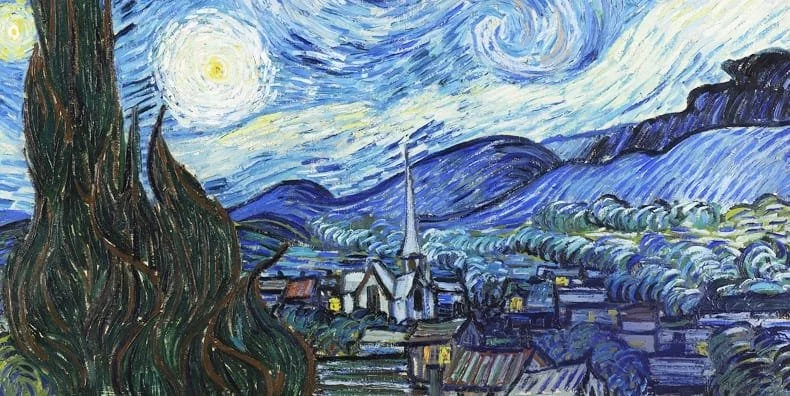
Many historians and psychiatrists believe that Vincent van Gogh may have suffered from bipolar disorder (Getty Images)
The Search for Love & Belonging
Depression often requires us to carry the weight of visceral sadness, pervasive unease, self-referential rumination on personal blame and shame, and even existential hopelessness. It amplifies very human feelings of loss and longing and leads many to fortify themselves from the world with a sense of not belonging. It is easy to forget who you are, sometimes to extremes of derealization and depersonalization.
For those who have felt inadvertently or intentionally misunderstood, ostracized, or unseen as a result of this burden, the romantic narrative and sense of being chosen can be deeply healing.
Most people in secure love relationships would say that their supportive partner makes them feel more whole, a reality which stems from the reparative nature of secure attachment. When someone is invested in reflecting back our innate qualities, goodness, and essence, we feel safe, soothed, and seen.
If you have lived with wounds of neglect or trauma, a new felt sense of security can foster lasting gratitude. In my relationship, I was grateful to my partner for journeying through my tangled layers of self protection and distortion to embrace the person inside.
But I was also aware of the risk for limerence, the vulnerable state where idealization, fantasies, and obsessive thoughts about a loved one converge. My longing for connection led many times to acute rejection sensitivity and emotional dependency. Together we had to process ruptures and establish relational habits that supported both interdependence and autonomy for each other.
The Joy of Authentic Connections
Many people with bipolar disorder seek depth and substance in relationships, and treasure it when found. The need for safe space for authentic self-expression and connection can be attributed to several challenges.
One is exhaustion from social masking, trying to prevent being considered “too much” through fear-based self monitoring. It comes with a painful awareness of the sociocultural barriers to authenticity.
Also, combatting a shifting sense of self from mood changes makes it essential to reflect often on what your true self and core values really are. We are compelled to do personal growth work in order to live a more consistent, and values aligned life. Once you have experienced greater internal integration and behavioral congruence, it becomes much easier to recognize that integrity in others. That relational resonance is precious and supports lasting connections.
In Jungian psychology terms, the psychic wounds caused by a chronic illness make it hard to maintain any semblance of false persona, and compel us to connect compassionately with the shadow of illness we may usually reject. No one including myself wants to have bipolar disorder. But instead of viewing it as punishment or personal failure, we can decide to entertain an archetypal force that jumpstarts growth and a pursuit of wholeness.
If we allow it, the humbling process of recurring ego disruption becomes a chance for the authentic Self to emerge. According to Jung our true self amplifies the innate qualities we were born with and finds ways to actualize everything we were intended to be, while elegantly holding any tension between hope and despair.
This invitation to more wholeness can be the catalyst for self empowered action, and usually comes with a simple and honest way of relating to others.
When others are able to meet us in our journey it feels natural to express unfiltered enthusiasm, and even love.
Reparative Euphoria & The Brain
Finally, falling in love is a powerful process reflected in neurobiological and chemical changes. Scientists have long documented significant corresponding shifts in neurotransmitter, hormone, and neural activity.
Levels of the reward neurotransmitter dopamine surge and generate euphoric feelings. Serotonin spikes from new love disrupt emotion regulation but also support stability as relationships deepen. The bonding hormone oxytocin is released through authentic connection to strengthen trust and secure attachment. It is incredible how vividly our nervous systems are changed by love and belonging.
For those with bipolar, these processes can be even more heightened. Observable differences in neurotransmitter functioning have shown lower concentrations of serotonin when depressed, and overactive dopamine reward processing correlating with mania. The resultant limbic system sensitivity can heighten intense emotions, especially those stemming from romantic love.
Combinations of neuroplasticity, relational safety, and even romance can start to rewire our neural networks for greater stability and health (much in the same way as committed meditation practice).
For me, navigating love while coping with bipolar disorder has been radically stabilizing through times of creative connection, and in difficult moments reconciling self distortions or irritability in order to steadily build together.
It has taught me to trust in the natural rhythms of relationship rupture and repair with its highs and lows, and to recognize them as opportunities for growth.
I believe that my bipolar history helped me better embrace love with profound gratitude and appreciation, and I hope it continues to amplify opportunities for creativity and renewal.
Living with bipolar is challenging. And while we cannot romanticize the illness itself, we can acknowledge the ways it weaves vitality and perspective into our lives. With time and healthy relationships we can learn to hold the deeper meaning in its tension of opposites, and in turn be transformed by it.
