
Bipolar Disorder and Inner Awakening: A Love Story
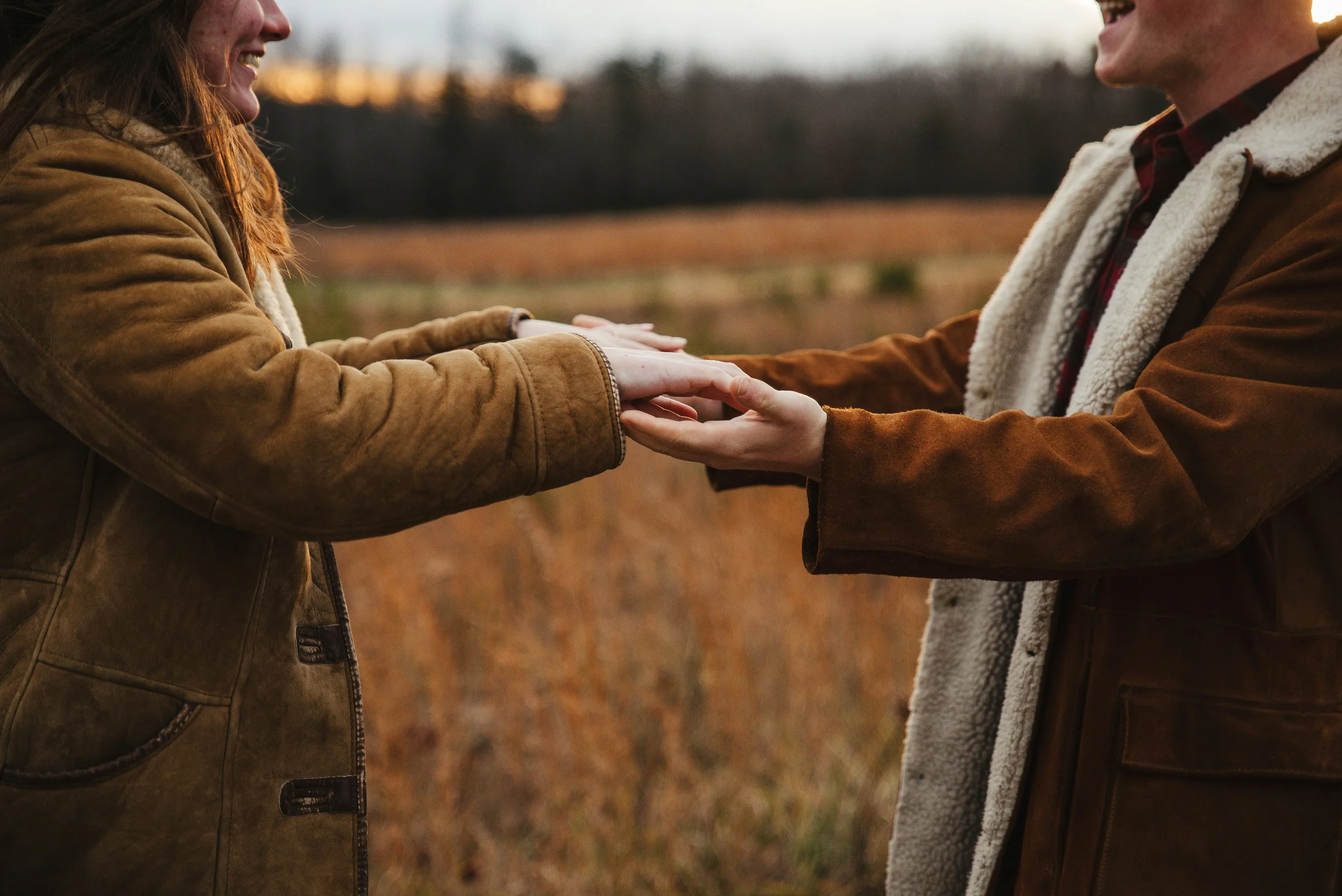
“To be seen in my wholeness, in my fire and my shadows, is the beginning of love.” - Anonymous
When I met my partner over two years ago on an evening dinner date, I was in a period of hard-won stability. I’d come out of an incubatory singleness and long depressive episode, and was embarking on new connections with fresh energy and curiosity for the world. That night I remember noting how he made my nervous system feel: he was playful and quietly engaging, and I felt a gentle invitation. We talked about things like how we both worked in the mental health field, he as a children’s counselor and I as a therapist for people with mood disorders and complex trauma.
The flow of exchanges felt so natural, and I tried to read his energy and physical cues when we parted ways at the end of the night. I went home feeling both vitalized and reflective - we were alike, yet so different. I know now that this feeling came from the striking differences in our upbringings and histories. He’d grown up in a militaristic family and known the self-discipline born of economic challenge and overcoming stigma. And I’d been raised to be a demure, East Asian woman who learned to suppress the tell-tale signs of having Bipolar Type II disorder.
My partner would later tell me that in the moment we’d met, he had gotten the sense that underneath the brave mask I was like a fragile bird, one he felt drawn to hold and care for. I cried when he said this, struck by his gentle recognition and acceptance of my scars after decades of mental and emotional pain. And in turn, I came to liken him to a turtle with his methodical determination, mental clarity, and steady pursuit of his ambitions. Remarkably, he also had ADHD. I could feel how this made us similar, as two people holding an internal tension of opposites.
Through texts and shared time over those initial weeks, I became completely enamored. Who was this person who made my fearful inner child feel safe enough to come out of hiding? And beyond a felt sense of safety, there were undeniable ingredients for lasting love including intellectual equality, creative camaraderie, spiritual alignment, and physical attraction. I started telling my friends, with awe and some self-consciousness, that it felt like a kismet bond, catalyzed by our shared dream of what true love could look like.
An observer might say we were simply a good, compatible match, and be happy for us meeting by chance on a dating app. But my intuition circled a deeper meaning for us - one guided by faith in forces beyond conscious choice and palpable excitement. I felt like he was someone I’d been searching for, whose iterations I’d dated and broken up with over the years on the long path that led to him. He felt familiar, and it was as if a dormant part of myself woke up just to whisper this message: You are safe now.
What came next was predictable in the best way, but also revealing about how my mental state shaped the unfolding of love. Dating sparked an effusive period of creativity for me, through songs, poems, and writing. I felt seen, safe, and compelled to create. I’d stay up late recording instrumental covers of love songs, trying to put words to what I felt. I'd gather words that came spontaneously to me and shape them into poems and prose. I shared these projects eagerly, reveling in his warm responses.
Now after two and a half years, I think back on the groundwork that was laid and wonder whether my bipolar diagnosis played a role in that fertile, expressive period. It makes me curious whether those of us with bipolar disorder love more intensely because of our capacity for depth of feeling, and if this capacity is what ignites our creative spark. I weighed my clinical knowledge about the condition alongside my lived experience of its cost, and was surprised by what I found.
Strong emotions & the urge to create
Bipolarity means by nature to live with cyclical mood fluctuations, at times to extremes that others rarely if ever experience in their lifetime. Many things can trigger an episode, and romantic excitement certainly is one of them. Intimate relationships bridge inner and outer worlds with profound depth, bringing on intense emotion that can move us to our core.
There's a longstanding theory among psychologists about the emotional range of bipolar disorder and the ability to create art. Scholars like Kay Redfield Jamison, who lives with Bipolar Type 1, have written extensively about such historical painters, writers, and embodied creatives. In her book Touched with Fire, she explores how poets like Lord Byron and Percy Bysshe Shelley harnessed mood changes to metabolize hard-won insights shared with the world.
Nowadays, neuroscientists can corroborate some of these theories through observing changes in dopamine activity that influence imaginative self-expression. Traits like sensitivity, intensity, and associative thinking underlie the creative drive and also a risk for mental distress. Hypomania can optimize creativity through onset of exuberant emotion, rapid brainstorming, quest for novelty, and bursts of high energy. Depressive episodes are no less transformative as they can instill hard-won wisdom about the nature of suffering. So even though all individuals with bipolar disorder aren’t self-proclaimed artists, they seem to possess emotional richness that can be channeled into powerful creative flow.
Searching for love & belonging
But symptoms of bipolar disorder aren’t always redeemable. Depression forces us to carry the weight of sadness, body pain, and rumination on shame, sometimes to the point of despair. Depression’s presence amplifies feelings of loss and longing that can become inflamed by the smallest rejection from someone we care for. Little wonder that many of us erect inner fortresses to protect us from the world and the sense of not belonging to it. We can feel like aliens walking through a parallel world, familiar to others but foreign to ourselves.
Truthfully, managing daily symptoms breeds moments of feeling misunderstood and judged. For those of us who’ve been ostracized or dismissed, romance and the feeling of being chosen can be profoundly healing. Healthy love renews our hope of being seen at last, for all our faults and foibles, in an unfiltered display of true self. Even psychologists affirm this instinct by noting how security in a relationship can make even the most disillusioned person feel reassured and safe.
For me, it’s hard to describe the depth of gratitude that this kind of love inspired. Throughout our years together I’ve felt a reverberating sense of gratitude for how my partner forged his way past my tangled briars of self-protection, just to embrace the person waiting inside the high, lonely tower.
I was also thankful that my therapist training helped me stay alert for signs of limerence, that vulnerable, obsessive state of fantasizing and idealizing our partner. Depth psychologist Carl Jung spoke of such obsessions as a poor use of our imagination, one that can inflate our egos in a way that impedes real, human connection.
But my watchfulness proved inadequate in the ways that mattered most, just as self-awareness isn’t the same as being able to act on it. Instead of limerence, it was fear and distrust that caused the most friction for us once the honeymoon period wore off. We had to weather my storms of overdependence and rejection sensitivity, and find anchor in our commitment to seeing conflict resolution through to the end. It worked - and I’m proud to say that we eventually arrived at more peaceful shores.
The joy of authentic connection
For many of us with bipolar disorder, depth and non-judgment in close relationships are a prize. This is no surprise given the ways symptoms destabilize our sense of self and our ability to show up consistently for our true values. Kindness and patience are hard to show when you’re in the throes of a mixed episode, when irritability and restlessness are roiling inside. And yet caution urges us to temper any outward signs. Whether it be social masking or faking smiles to protect our exhausted interior, there are so many barriers to just being yourself.
Trying to show up consistently in an intimate relationship makes it all the more essential to know your personal values. These reveal our true selves, even in the stormiest times. It does require effort and time to do the work of building congruence between belief and action. But once you’ve experienced more integration of the two, it becomes much easier to trust in your own integrity. We can also recognize it more easily in others. That mutual resonance is precious and can help in forging a lasting bond.
Chronic illnesses like bipolar disorder also compel us to gradually come to terms with the shadow of illness we would rather reject. I’ve found this to be true, even in creative periods when I fear the onset of hypomania from too much unbridled energy. But instead of viewing my diagnosis as a punishment or personal failure, I try to lean into the life force beneath, the one that longs for a world big enough to hold my fire and my shadows.
I also learned that bursts of artistic expression didn’t have to fade over time; instead, they started simmering more quietly beneath the surface of daily life together. I think back on how it arose most consistently after we’d had a fight and resolved it, when my anxious preoccupation was once again soothed and I felt inspired to express my relief.
And the normal, healthy process of rupture and repair came to mirror our respective qualities - his discipline and commitment, and my own courage and willingness to try again. I’d call on these strengths for support when a text reply was slow to come, or when I felt his withdrawal to internally process. At first, my fear of abandonment made me pester and nudge him to speak even if it was too soon. I credit my symptoms of restlessness and critical inner monologue for making this feel like the only way to respond.
But I’m grateful to say that we’ve seen each other through many such moments with radical candor. I’ve seen him angry, unsettled, and caught unawares. There have been moments where I’ve pulled away and fantasized about starting over. In our returning each time, I’ve discovered a stabilizing truth: that the normal ebb and flow of conflict and resolution actually parallel my patterns of self-abandonment and return. Each time we resolve a conflict and choose to move forward in peace, I’m inspired to trust myself a bit more. My penchant for intuitive, artistic creation feels like proof of that.
This truth has awakened more hope and authentic self-expression than I ever thought possible, not just in creative projects but also in how I envision our future. Bipolar symptoms or no, there’s a growing sense of confidence that I will be seen, that the beautiful creations I bring into the world will be witnessed, and that we will prize each other above them all.
In the midst of ongoing cycles of depression and restless energy, there’s a type of unfiltered openness that he’s uniquely seen. For those who become an intimate part of our life, it can be refreshing for them to see you weathering suffering in honest, steadfast ways. And as they naturally mirror our qualities back to us, they’re often more able to reveal their own darkness. We can then meet in the middle, with hearts wide open and souls bared.
It’s this meeting in the middle that stays with me. Whether it’s learning to balance late night art-making sessions with practical needs for rest, or reconciling how personality differences compel us to find compromise, love urges me to come back to center. It awakens my trust in our ability to navigate life’s tension of opposites together, and in turn be transformed by it.
