When Beauty Strikes: Stendhal Syndrome and Terror in The Sublime
In 1817, French writer Stendhal began to tremble and quake while standing before Volterrano's fresco of the Sibyls in Florence’s Basilica of Santa Croce, caught up in a wave of “heavenly sensations” in ecstatic response to their “sublime beauty”. With awe, he recounted that singular moment where “I had palpitations; the life went out of me, and I walked in fear of falling”. What he described would later be named after him as Stendhal Syndrome, the sudden onset of psychosomatic distress triggered by witnessing high art.
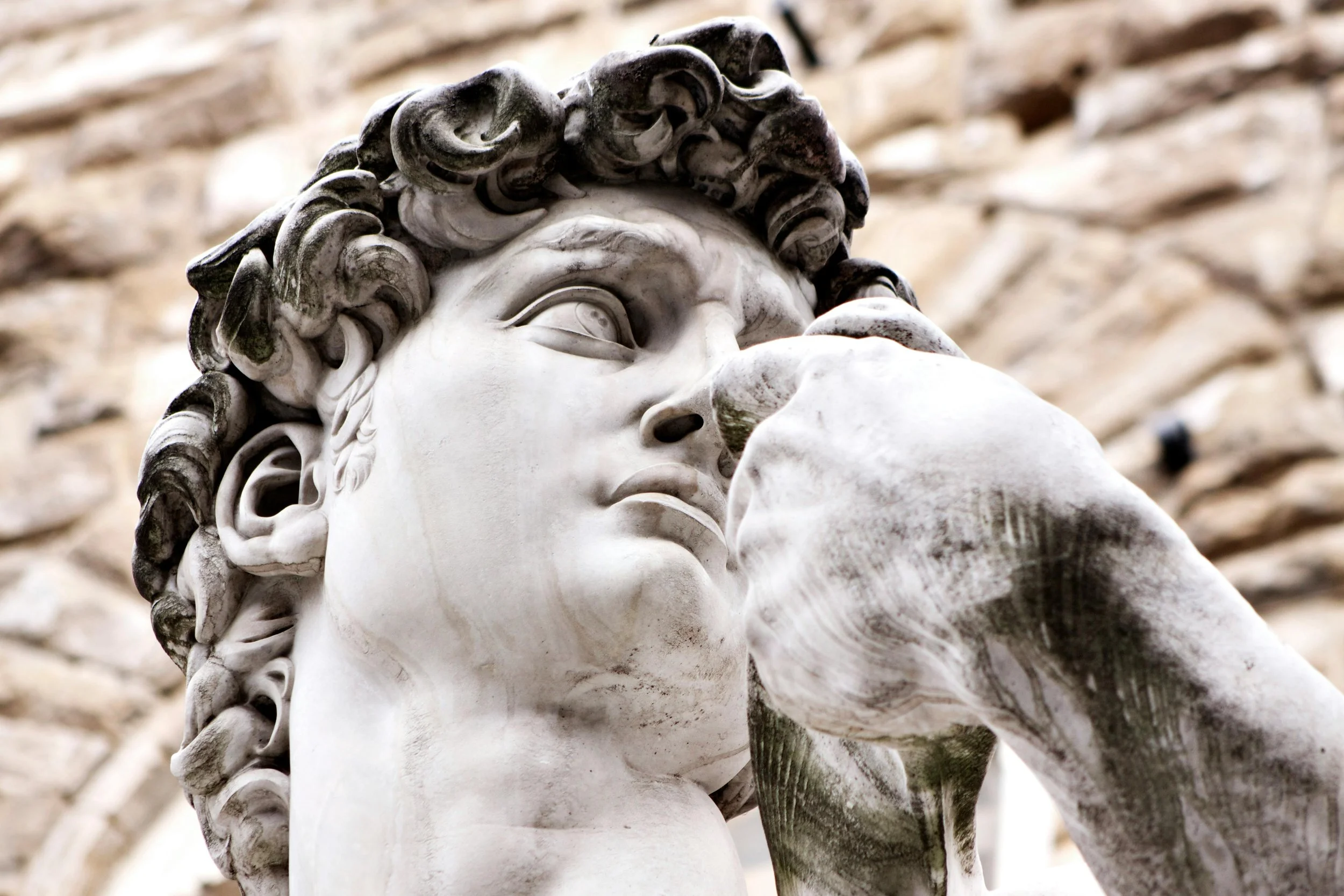
Psychologists were stunned to discover that Stendhal’s episode was not unique; in fact, to this day staff at Florence’s nearby Santa Maria Nuova Hospital routinely treat tourists much like him for acute disorientation, dizziness, racing heart, and other symptoms while viewing masterpieces like Michaelangelo’s David or Caravaggio’s Bacchus. Some were rushed to emergency care after abruptly fainting.
When reading about these episodes, I was hard pressed to categorize them as hapless accidents or as enviable transcendent experiences. As an artist and painter, I thought about how gratifying it would feel for an audience to be so viscerally enthralled by my pieces. But if someone fainted, might I feel the exact opposite–mortified that an innocent had been struck down as a result of my self-expression? Or, that whatever power the imagery held had been born without my awareness?
This stirred up further reflections on the subjective nature of art, the role of artist’s intentions in the creation of beauty, and the potential for their work to contact the sublime, each of which we will explore.
Escaping the Mundane
Traditionally the fine arts are closely associated with aesthetic beauty and sensory experience that offers profound pleasure. Many of us have known the joy of wandering a favorite museum or gallery for hours on end, learning more about familiar works or delighting in the fresh experience of new pieces. It is a time and energy investment that reaps incalculable rewards, expanding our minds and renewing our spirits as we find respite from the dry demands of modern life.
It also deepens our connection to the numinous, letting us in on the comforting secret that drudgery and work are not the sole purpose of existence, and there are nameless wonders and wider planes of consciousness available to us. Beauty itself is proof of this. As renowned 20th century painter Agnes Martin once said, “When I think of art I think of beauty. Beauty is the mystery of life. It is not in the eye, it is in the mind. In our minds there is awareness of perfection.”
Few would say they are high-minded enough to be constantly attuned to beauty’s mystery. But it is refreshing to realize the limitless opportunities around us to tap into its flow. Martin herself was a disciplined ascetic who lived in the New Mexico desert crafting large-scale, quietly luminous paintings that inspired profound reflection in her audience. Her work reflected a life of keen meditation on the beauty of the natural world and how it can speak to our emotions and souls.
Embracing Beauty and Pain
But not all artists experience beauty as Martin did. Others, intentionally or otherwise, have used their craft to explore darker realities of life. Writer Somerset Maugham wrote of beauty as “something wonderful and strange that the artist fashions out of the chaos of the world in the torment of his soul.” He touched on the fine line between disorder and redemption, and the capacity for humans to inhabit the delicate space in-between.
Poet and novelist Rainer Maria Rilke held an even broader view, stating that “beauty is nothing but the beginning of terror, which we are still just able to endure, and we are so awed because it serenely disdains to annihilate us.” In his writing as in his life, he championed the art of embracing life in its totality, from the astounding to the terrifying, surrendering to its flow while keeping faith in its transient nature.
For many of us these perspectives might ring true in different seasons in accordance with our personal history and experience of beauty. Consider the simple delight of lounging and listening to a favorite song at the end of the day, its blissful swells magnified by the tranquil solitude of evening. In those moments even the most tormented, human lyrics seem to enhance the sense of tapping into something profoundly greater than yourself.
Or we can wrestle with such multiplicities when engaging with Renaissance artwork that elegantly portrays horrific scenes of death and violence, depictions that provoke admiration and revulsion in equal measure.
Stendhal’s Syndrome
In Florence, what Stendhal felt as he gazed upon the epic mural of Grecian prophetesses stirred something in his soul. He was a romantic writer who excelled in crafting psychologically complex fictional characters. His novels also popularized the concept of the “tourist”, a faithful sojourner traveling to see famous landmarks, reveling in their beauty and historical import. He journeyed thousands of miles across Europe as an eager student of the arts.
Of that fateful day in 1817 Stendhal later wrote:
I was already in a kind of ecstasy by the idea of being in Florence, and the proximity of the great men whose tombs I had just seen. Absorbed in contemplating sublime beauty, I saw it close-up — I touched it, so to speak. I had reached that point of emotion where the heavenly sensations of the fine arts meet passionate feeling.
He might have been gratified to know he was not alone in his encounter. In 1989 chief of psychiatry Dr. Graziella Magherini of the Santa Maria Nuova Hospital coined the term Stendhal Syndrome after treating over 100 tourists from local galleries. Many described with bewilderment their psychological distress, bodily discomfort, and even acute mood disorder symptoms. These were the more severe cases; Magherini conjectured that minor instances of the syndrome probably occur quietly all over the world, wherever art that moves is to be found.
Other symptoms she documented were crying spells, disorientation, dizziness, heart palpitations, tachycardia, agitation, anxiety, panic, paranoia, delusions and hallucinations. These often abated after two to eight days of undisturbed rest, and Magherini began prescribing patients with a prompt flight back to their home countries to fully recover.
More recently in 2022, Florence cultural center founder Simonetta Brandolini d'Adda reported that 10 to 20 times each year, gallery visitors are seen tearful, disoriented, and visibly shaken by Botticelli’s The Birth of Venus and other Renaissance treasures. A few travelers have even suffered epileptic seizures and heart attacks.
Psychiatrists have tried to explain this malady through neuroscience, theorizing that it befalls people with strong religious imaginations, emotional sensitivity, or preexisting mood disorders. They cite situational stressors including travel fatigue, jet lag, cultural overload, or dehydration. Their skeptical approach to the syndrome, which is not an official clinical disorder, avoids romanticizing a multi-layered phenomenon that might have banal origins.
The Brain On Beauty
But the correlation between the artwork and the fantastical reactions cannot be dismissed. Thankfully, interdisciplinary research on how beauty affects the brain can shed some valuable light.
Neuroaesthetics is an emerging field combining psychology, neuroscience, and the arts that deepens our understanding of beauty. A 2004 experiment using fMRI scans observed changes in participant’s brains as they were shown images of traditional artwork, and found that blood flow increased as much as 10% to brain circuits governing pleasure and reward. Areas included the interior insula regulating pleasant emotion, the putamen involved in reward seeking, and the ventral striatum where dopamine is produced in anticipation of reward. These levels were on par with observed reactions to gazing on images of a loved one.
Similar neurological responses are true for music. Neuroaesthetics has confirmed such brain activity occurring in moments of musical rapture. Auditory swells of anticipation, tension, and resolution can carry listeners away on an imaginative journey that rouses strong emotion and temporarily loosens inhibitions.
Engaging with the arts also activates our Default Mode Network, a collection of brain regions guiding self-reflection, daydreaming, imagination, and envisioning of our future. In this way beauty invites us to explore fundamental themes of selfhood – through being moved, knowing we are moved, and tenderly uncovering innate capacities for expansion and awareness. Just as eminent playwright George Bernard Shaw observed, “You use a glass mirror to see your face, and you use works of art to see your soul.”
I think back on my experiences of immersive artistic pleasure, and recall the sense of peace I felt while contemplating Agnes Martin’s abstract painting Leaf In The Wind at the Norton Simon Museum. Her distillation of natural forms into meditative patterns pulled me in, grounding my senses while also stimulating a realization that I had felt this way before. I was acquainted with this gentle, safe stillness. This was a feeling of home. It lasted only a few minutes, but the encounter steadied my heart, reassuring me that the space where the inner sanctum and sacred rest meet is always accessible.
Portals to The Divine
Beyond neuroscientific confirmation of art’s impact, I was struck by the ties between Stendhal Syndrome and viewers’ spiritual lives. Religious beliefs were considered a preexisting risk factor for vulnerability to symptoms, a correlation that calls to mind the intimate bonds between art and faith.
We might consider the dominant role of religion in Renaissance art, including the use of elaborate spiritual symbology in some of the most famous masterpieces of the time. Their multi-purpose role as devotional objects harkens back to the popularity of icons in the prior Byzantine era for Orthodox Christian worship. By depicting venerable religious figures and events, icons translated liturgical concepts for the laypeople and directed their gaze heavenward.
To this tradition, Renaissance painters and sculptors added levels of humanism and naturalism that heightened religious fervor. Much of the commissioned artwork was used in churches to enhance both public worship and private prayer life. Devotees were enthralled by how lifelike and immersive these familiar Biblical characters and stories became.
In modern times, meditating on allusions to the divine can be as compelling as religious ritual. Contemplating dramatic color and form and archetypal themes of creation, heroism, and salvation can move us deeply. Time nearly stands still as our self-concept, in connection to enigmatic universal energy, is quietly dissolved and then reborn. Just as monk and theologian Thomas Merton once stated, “Art enables us to find ourselves and lose ourselves at the same time.”
Musical arts also serve an integral role in religious worship. Melodic swells and pious lyricism can crack the soul wide open to spiritual revelation. In a more secular turn, music has become an essential component to the set and setting of psychedelic trips for both recreational and therapeutic use. It serves as a comforting backdrop to vulnerable experiences of ego dissolution and existential discovery.
Diagnosing The Spiritual
Religious ecstasy and mental disturbance have historically intertwined in surprising ways. As detailed in writings by ancient desert fathers and mothers like St. John of the Cross and Hildegard of Bingen, moments of mystical union can dissolve the boundaries between self and divinity. Whether in ecstasy or fear and trembling, their consciousness was suspended while body and mind were transfixed, temporarily unable to continue normal functioning.
But can there exist a fine line between mystical encounter and mental health crisis? Can relating to the sacred overwhelm human faculties in a way that feels disturbing? St. John shed light on this in his detailed description of his Dark Night of the Soul, a prolonged period of depression and mental anguish much like ego dissolution that he believed was to purify him in preparation for further union with God.
Across history his experience has resonated with many who have had periods, sometimes spanning years, of searching for the lost inner spark that gives life its meaning. Despair from being once found and suddenly lost can manifest in mental health distress including bouts of depression, anxiety, and existential dread.
During a period of my faith journey, I experienced a fervency that psychologists might consider religious coping, possibly touching on the delusional. On morning walks I would have the pronounced sense that a universal force was prompting me to turn in specific directions. I had been feeling profoundly lost and craving guidance, and thus surrendered eagerly to these inspired moments. In retrospect, it may have been my severe anxiety and mood disorder symptoms manifesting as magical thinking. But was it entirely one or the other? The line still feels unclear.
Admittedly, religious delusion is typified by grandiosity and beliefs that stray from common teachings. The feedback I received from my spiritual leaders was positive and they highlighted the uniquely personal nature of spiritual formation. Their reaction reminds me of how faith is often subjective, and what feels like mystical encounter to one might signal psychological crisis to another.
The ambiguity between transcendence and disturbance, between being elevated and becoming undone, is at the heart of Stendhal syndrome. Perhaps tourists collapsing in Florence were not suffering from mental illness any more than ancient mystics were. Instead, they may have been awed by beauty so profound that it exceeded their nervous system’s capacity to regulate. Whether inspiring enthrallment or unease, the difference here may speak more of the person than of the art.
Artwork That Disturbs
Despite their inherent subjectivity, the arts are meaningful to us in somewhat consistent ways. For many, themes of goodness, truth, and beauty serve to uplift and offer reprieve. Concurrently, for as long as humans have been publicly expressing vulnerable thought and feeling, we have been confronted by unsettling themes of suffering, despair, and hopelessness. Whether we persist in finding a redemptive narrative then becomes up to us.
Both Greek philosophers Plato and Aristotle held strong views on the psychological and emotional power of art. Plato insisted that risk of awakening citizen’s wild passions required that art forms be rigorously censored. He believed they encouraged irrationality and emotional manipulation, obfuscating the authority of the rational mind. He particularly disparaged theatrical plays of the time that conveyed tragedy.
Alternatively, Aristotle believed that art served practical roles of catharsis and aesthetic pleasure. Even tragic themes were a tool for promoting civic life as an outlet for suppressed emotions. Their diverging conclusions to painstaking reflection are remarkable, but stay consistent with their philosophical differences, with Plato’s more utopian and abstract thought, and Aristotle’s leanings toward the commonsensical.
For most of us it is easier to support Aristotle’s view. I myself have reaped rewards from every creative pursuit, whether visual, musical, poetic or prose. But Plato’s mandate is not dismissible; we can avoid reductionism by recognizing his nuanced motivations. Some might even perceive urgency in his call to disseminate only “good” art, as evidenced by the panic attacks and hallucinations suffered by the tourists in Florentine hospitals.
The Role of The Artist
To me, an essential question posed by Stendhal Syndrome’s and what it reveals about beauty and pathology concerns the significance of artistic intentions. Do artists have a responsibility to viewers on the messages they convey?
Certainly, the Renaissance masters had enormous pressures behind their artistic feats, such as meeting the demands of wealthy patrons, proving their artistry, and offering creativity as a sacrament. Regardless of motive, their expression of spiritual and archetypal material harkened back to the words of Leonardo Da Vinci, who marveled at how “the painter has the Universe in his mind and hands.” Does an ethical imperative arise from this immense influence?
Some modern creatives take a hard stance. Alice Walker, novelist and author of The Color Purple contends that "artists are messengers whose responsibility is to unite the world – a faith that will lead not to destruction but to transformation". She recognized the opportunity to uplift, connect, and inspire social healing, and capitalized on this in her Pulitzer-prize winning writing. But is the artist’s mandate actually so clear?
Public debate on the ethics of art tends to circle dichotomies of moralism versus autonomy, and freedom versus accountability. Disagreement persists on whether creativity should observe moral limits, or be judged solely for its aesthetic impact. Many argue about how disturbing subject matter might reflect a creator’s poor ethics, or instead add to social discourse on meaningful yet challenging topics.
As an artist, mental health therapist, and person of faith, I have also weighed these views. My value for integrity compels me to integrate the theological implications of creativity. Eminent 20th century author and theologian C.S Lewis painted a sobering picture when arguing in his essay The Weight of Glory:
When we remember that every person we meet is moving toward everlasting splendor or everlasting ruin… If your neighbor is destined for glory, then your interactions with him are never neutral. Every conversation, every act of courtesy or neglect, every joke, every dismissal, every kindness, every exploitation participates to some degree in his movement toward one end or the other. We are all day long helping each other either to remember heaven or to forget it. We are not merely passing time together; we are shaping one another.
This eternal perspective makes me reconsider the pieces I've created with pride: did I intend to express divine beauty, wrestle with darkness, or process inner conflict? The question itself reveals how self-discovery often outpaces investment in outcome, regardless of how others interpret our finished work.
However in considering the viewer, I seek to encourage abstract and associative thinking. Ultimately, I do not care what conclusions they draw—I only want to stimulate their imagination. This corroborates with my gut reaction to Stendhal Syndrome; namely, that classical beauty’s ability to invoke mental instability reveals how, despite our intentions, the impulse to control a work’s impact is mere fantasy.
Still, most creatives hope to contribute meaningfully to humanity’s lexicon of shared beauty, not to stir up fear or despair. We must trust in others’ personal intuition to guide them toward the answers they seek or the questions they are avoiding, whether or not it is furthered by our craft. Even painful moments of ego death can contribute to individuation and pave the way towards flourishing. It is an honor for a personal creation to support such a beautiful unraveling.
Instead of suggesting a mere anomaly, Stendhal Syndrome might actually be a testament to the power of human imagination to imbue visual, textural, audial, and lyrical cues with existential meaning. Returning to my original impulse to view it as either a hapless accident or transcendent experience, perhaps the tension between these extremes is itself the point. Encountering disturbance alongside grace is part of the process of accessing the most sublime reality of all: growing into the fullness that we were created for.
